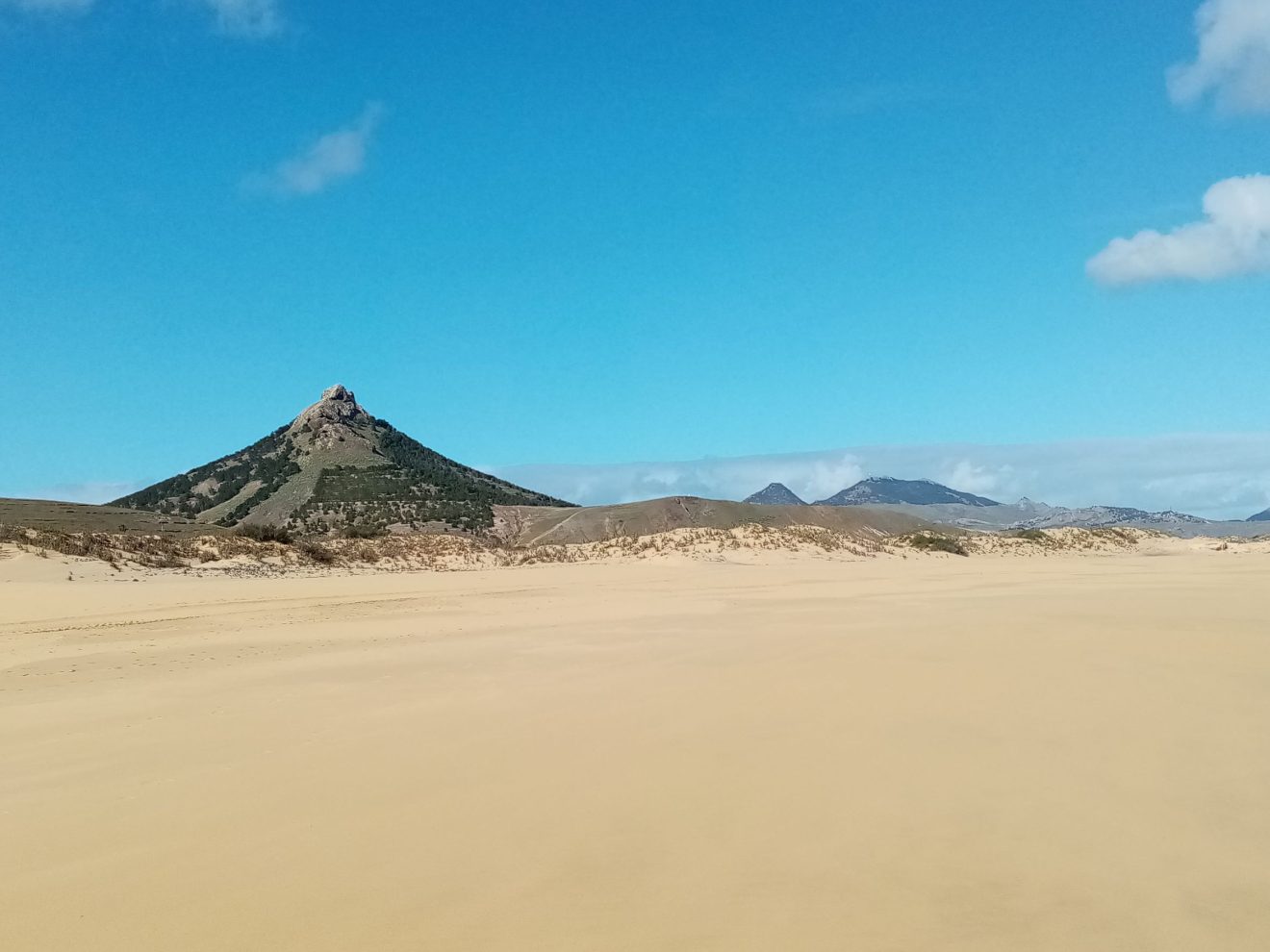
Tourism remains the primary driver of the Porto Santo economy; however, the City Council is actively seeking to curb the construction of new hotel units, prioritising the sector’s sustainability and promoting the island as a “refuge of the senses.”
“Porto Santo is an island with limits, and human pressure is the main one. If we had 15 more hotel units along the beach, each requiring around 500 staff, we would consume a vast amount of space,” warns the mayor, Nuno Batista.
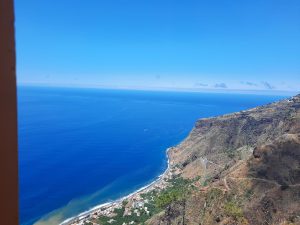
Speaking to the Lusa agency, the mayor stressed that any model promoting mass tourism is “completely out of the question”. He emphasised that despite the island’s small size, approximately 43 square kilometres, it offers opportunities for a variety of organised and sustainable tourism models. The City Council (PSD/CDS-PP) is now focused on marketing the island as a refuge of the senses and a destination tourists want to visit time and time again.
“Mass tourism will never be our option,” the mayor stated. “Our territory is finite, and it is better to regret not having proceeded with certain investments in new units than to commit a grave, irreversible mistake.”
As evidence of this policy, Nuno Batista, who has led the municipality since 2021, noted that €16 million in municipal projects has been approved under the 2030 community framework. This investment is directed towards improving quality of life, heritage restoration, and environmental sustainability, with the construction of new infrastructure remaining “rare”.
Data from the Regional Directorate of Statistics of Madeira shows that in 2025, Porto Santo recorded its highest number of tourists in collective accommodation during August, with 19,377 guests across 26 establishments. This figure does not account for the approximately 200 registered local accommodation units. Throughout that year, the 26 hotel units (not all of which operate year-round) hosted 134,731 guests—97,083 from Portugal and 37,648 from abroad, primarily Germany, the UK, and Denmark.
“We have made a clear choice in favour of national and regional tourism, and it is no coincidence that over 50% of our visitors are domestic,” said Mr Batista. He lamented the ongoing difficulties regarding air connectivity, with heavily concentrated flights during the summer months.
“Someone needs to help me explain to the public why 40 planes land at the airport next door [on Madeira] every day, while none land here,” he said. “We are not being overly demanding; we just want the opportunity to have a regular flight. It is unjustifiable that, at present, there is not a single year-round connection to mainland Portugal.”
Mr. Batista argues that this is a matter of territorial cohesion, which jeopardises the mobility of Porto Santo residents and limits the options for mainland citizens wishing to holiday on the island outside the peak season.
While Porto Santo has a permanent population of approximately 5,200, the island experiences peaks of 30,000 people during the summer months, with the nine-kilometre-long beach serving as the primary attraction. To meet labour demands, tourism businesses have increasingly relied on immigrant labour, partly supported by a local vocational training school attended by young people from Cape Verde and São Tomé.
“Immigrants are fundamental and essential. You only have to walk through any service or hotel establishment in Porto Santo to see young people from São Tomé or Cape Verde working,” the mayor noted, highlighting the excellent integration of these communities. As a testament to this, the municipality’s Youth Participatory Budget recently awarded funding to a project proposed by young Cape Verdeans to host a multicultural festival between Porto Santo, São Tomé, and Cape Verde, scheduled for October or November.
The City Council is now committed to drafting a long-term plan for sustainable tourism, aiming to establish the maximum carrying capacity the island can withstand without harming its sustainability, particularly regarding the flow of people and vehicles.
“To make decisions, you need data and facts,” Mr. Batista concluded. “Making assumptions is often the first step towards failure.”
Samantha Gannon
info at madeira-weekly.com
Views: 23