The Regional Government has resorted to the force of law to ensure that hospital beds occupied by problematic discharges are freed up and the patients occupying them are transferred into homes. This is one of the initiatives of the joint ordinance, which has just come into force, creating tripartite financing between Social Security, the patients’ families, and the Health Service.
Ordinance No. 157/2026, signed by the Secretaries of Health and Civil Protection, Micaela Freitas, and the namesake of Inclusion, Work and Youth, Paula Margarido, results from the adaptation of national legislation, in this case the Ordinance No. 38-A/2023, of 2 February, approved by the Government of the Republic, which establishes “the terms and conditions under which the articulation is carried out for the purposes of referencing and monitoring people who, for social reasons, remain hospitalised after clinical discharge, in hospitals of the National Health Service (SNS), through the use of a temporary and transitory shelter in social response.”
The decision aims to impose procedures for a faster and more efficient solution to a chronic problem that has dragged on for several years.
“In the wake of the national panorama, the Autonomous Region of Madeira, in particular the Regional Health Service, is also struggling with serious constraints emerging from the maintenance of hospitalisation of discharged climically patients, for social reasons, are unable to return or to remain in their residence, either due to lack of autonomy, due to difficulty or lack of self-care capacity or for personal reasons and/or insufficient or non-existent family support or formal support network,” quotes the ordinance.
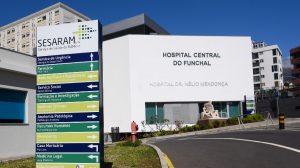
The constraints have been recurrent. On the 14th of January, DIÁRIO reported that one in three hospital beds was occupied by ‘non-compliant discharges.’ At a time when 231 people were hospitalised without needing medical care, and 16 were hospitalised with influenza A. The clinical director of SESARAM renewed their appeal to nursing homes to avoid cancelling surgeries and appointments.
According to the lines of national legislation, the regime adapted to the regional reality defines “the competent entities, the referral circuit, and the financing mechanisms applicable to the reception of people with high hospital clinical needs whose stay is exclusively due to social reasons and who do not meet the criteria for integration into a continuing care unit.” The solution is a fallback and, more than finding a definitive solution, aims to provide an immediate response, as it is considered “temporary and transitional accommodation to a social response.”
One of the ordinance initiatives is the tripartite funding model for those entering Residential Care. While the Social Security Institute is responsible for co-financing, through budget allocations, the cooperation and contractual instruments established, families are also called upon to financially contribute to ongoing care and support.”
The Regional Government considers the funding a “condition necessary for the operationalisation and sustainability of the carehome responses provided for in the regime.” The decision on which homes will welcome ‘high-problem’ cases will come through agreements between the Social Security Institute of Madeira and SESARAM, which are also responsible for the creation of protocols that comply with the law.
The decision was signed on the 31st of March and entered into force on the 1st of April.
Samantha Gannon
info at madeira-weekly.com
Views: 39