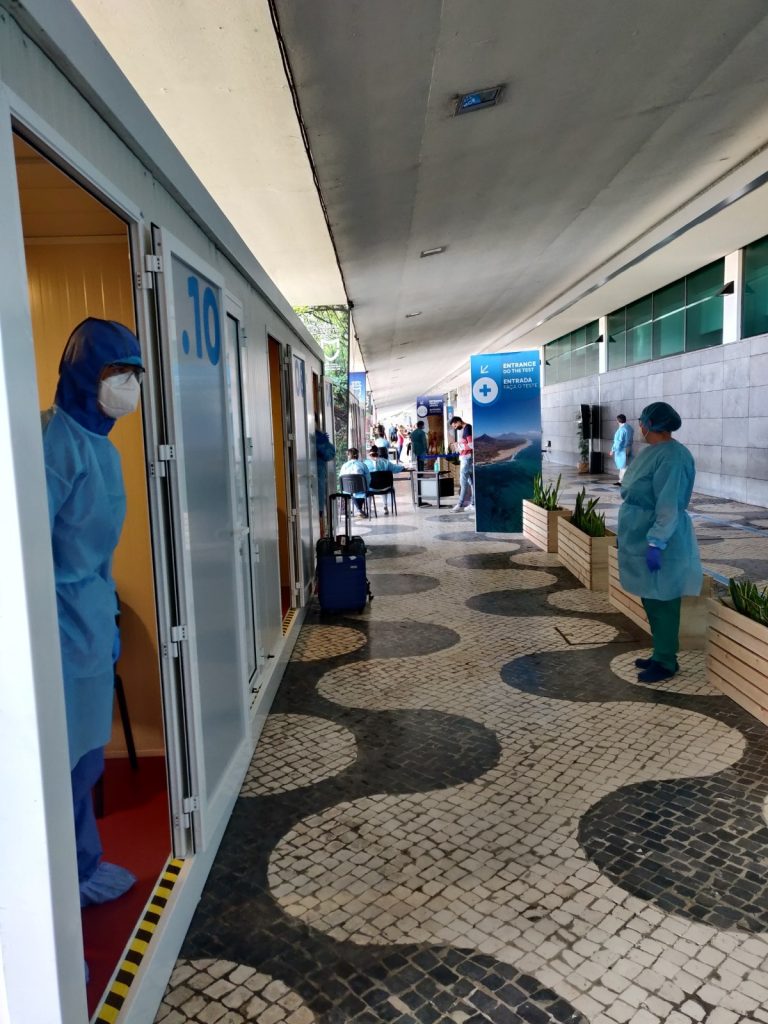
Nine elderly residents from the Long-Term Continued Care Unit at Atalaia Living Care have been diagnosed with scabies. The news was confirmed to DIÁRIO by a member of the institution’s Board.
According to the same source, the contingency plan for controlling infectious diseases was activated right away. “All infection control measures are in place, and suspected cases are being isolated even before final confirmation. Based on certain clinical criteria, confirmation is almost a certainty,” a source explained. Furthermore, alongside the nine confirmed cases, extra care measures are being put in place for the professionals who work closely with these residents. “All procedures are being followed, and the established protocol is strictly observed. Naturally, we’re concerned about the well-being of older residents, many of whom are highly dependent, which makes these situations especially sensitive.”
The situation, first reported by RTP/Madeira, has been shared with the families of those in isolation. The Atalaia Living Care Continuing Care Unit, which houses 261 residents, is part of the SESARAM Infection Prevention and Control Programme.
The Board considers the families’ concerns “understandable,” as well as the extra care shown by the staff. Still, it emphasises that these are professionals with specialised training and experience in infection control. They are part of dedicated teams within the infection control program, receiving ongoing training and building expertise, especially during the COVID-19 pandemic, which proved to be a highly challenging learning experience in this field.
The symptoms of scabies are:
- intense itching, especially at night
- a raised rash or red spots
Scabies usually causes a rash that spreads over most of the body, except for the head and neck.
It often shows up between the fingers, around the wrists, under the arms, and around the waist, groin, and bottom.
In older adults and young children, the rash can also appear on the head, neck, palms, and soles of the feet. People with weakened immune systems may develop a rare, highly contagious form called crusted scabies, which causes a thick, flaky rash to form around the elbows, knees, hands, and feet.
Samantha Gannon
info at madeira-weekly.com
Views: 6