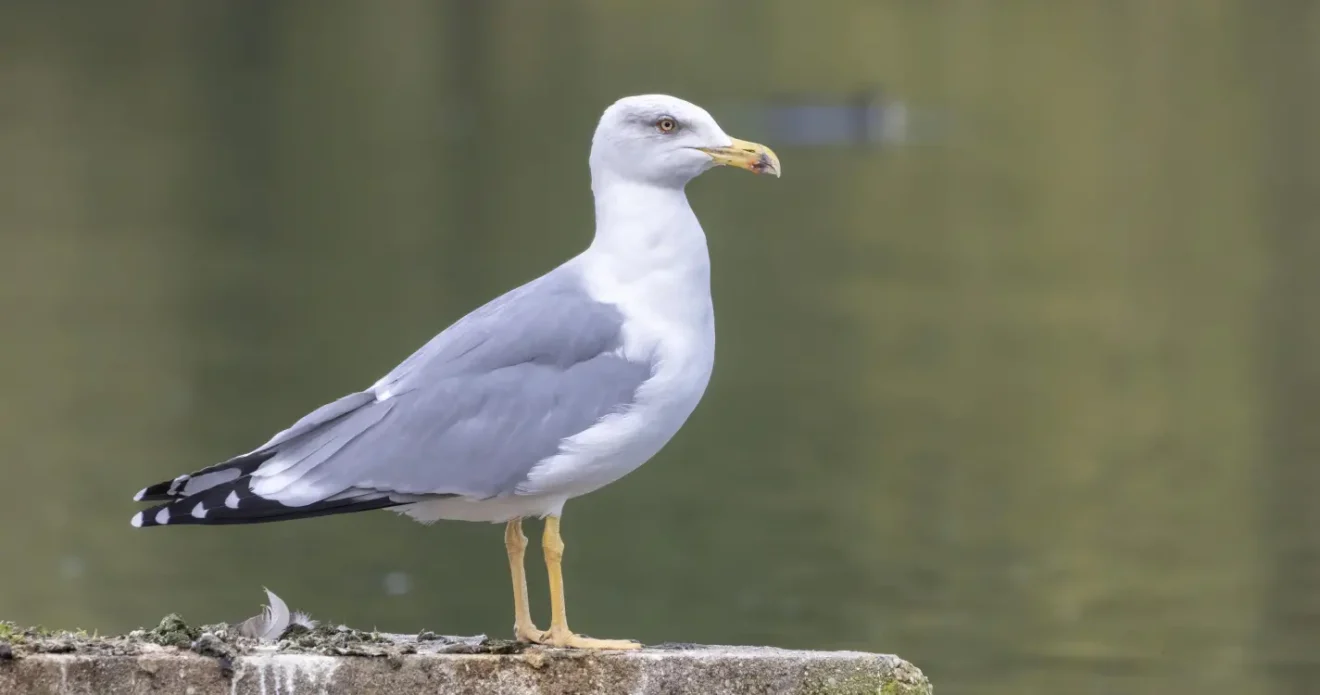
A seagull that tested positive for the avian influenza virus (H5) was collected on the 4th of October in Funchal. The confirmation was made by the National Institute of Agrarian and Veterinary Research (INIAV) on the 13th, after analysis of samples sent by the Veterinary Service of the Region.
The bird was captured live by the Botanical Garden Bird Recovery Centre, under the existing protocol between the Institute and the Regional Directorate of Veterinary Medicine. Two days later, on the 6th, technicians collected fecal samples, as provided for in the ‘Avian Influenza Surveillance Plan.’ “The sample was sent to Lisbon on the 8th and, on the 13th, we received the positive result,” explained a source.
The case was immediately reported to the competent authorities, Health Authority, GNR, and Veterinary Emergency Office, and the contingency plan was activated, which is currently in the active surveillance phase. At this stage, all dead, injured, or debilitated wild birds that are found will be collected and analyzed.
Despite the confirmation, it is stressed that the risk to the human population is very low. There are no cases of avian influenza in humans in the Region, and contagion is unlikely. However, the population is asked not to handle dead wild birds.
To prevent possible outbreaks, biosecurity measures are being reinforced with the main poultry producers in Madeira, with an awareness meeting already scheduled. “We are in a phase that depends on nature and luck. We will remain vigilant at all times.” Concluded the statement.
In recent years, Madeira has already recorded episodes of seabird mortality due to bad weather conditions in the Atlantic, but this is the first positive detection of avian influenza in a seagull in the Region.
The public is encouraged to avoid direct contact with wild birds and to report any unusual occurrences by contacting the SOS Wildlife hotline at 961 957 545.
Later on, the following report was published by JM.
The case of bird flu detected last Monday, in the parish of Sé, in Madeira, is the first in the Region and is also “the first of a highly pathogenic virus of the H7 subtype in a wild bird.”
“During the 2025/2026 season, until the 13th of October, one case of infection with highly pathogenic avian influenza virus of subtype H7 was confirmed in a wild bird. In addition to being the first detection of a virus of this subtype, it was also the first confirmation of a case of this disease in an autonomous region,” reads a statement released by the General Directorate of Food and Veterinary Medicine (DGAV).
According to the source, this is the 28th outbreak registered this year in the country. The infected bird is a yellow-legged gull.
info at madeira-weekly.com
Views: 1