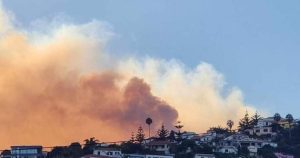
Madeira intends to use drones to drop plant seeds in hard-to-reach areas affected by the fire that raged across the island between the 14th and 26th of August 2024, confirms a spokesperson for the Institute of Forests and Nature Conservation (IFCN).
“To overcome the physical access restrictions to the areas, the IFCN is currently evaluating and testing the use of ‘seed balls’ with species adapted to local ecological conditions. A solution that aims to facilitate the recovery of inaccessible areas.”
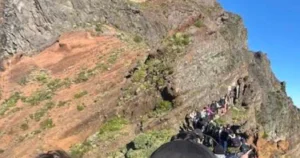
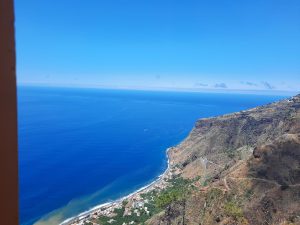
The fire, which raged for 13 consecutive days in Madeira, covered an area of 5,116 hectares, between the municipalities of Ribeira Brava, Ponta do Sol, Câmara de Lobos (in the west zone) and Santana (on the north coast), and about 84% of the burned surface has slopes equal to or greater than 50%, most of which are located in challenging topographical areas.
The use of ecological restoration drones is being evaluated by the regional authorities. Unfortunately, this is the first time that this has been tried, and there are no studies indicating the best seeds for this purpose. Once viable, the ‘seed balls’ are prepared with protective substrates and specific mixtures of native seeds, and will be launched via drones.
“This approach is part of an integrated ecological restoration plan, adapted to the geomorphological particularities of the region, promoting the recovery of the ecosystem, with minimal disturbance to the soil and existing biodiversity,” says the IFCN.
Following last year’s fire, the IFCN outlined an “emergency stabilisation plan,” acting immediately in an area that presented “greater sensitivity.” The stabilisation included the removal of charred vegetation, installation of physical barriers, planting of species, and, at the same time, prepared intervention and medium to long-term ecological restoration projects, which are under consideration within the scope of European financing mechanisms.
These projects, valued at around 1.4 million euros, point to the introduction of 170 thousand plants.
The 2024 fire consumed 139 hectares of laurel forest, which is a world heritage site and occupies a total of 15,000 hectares, and threatened the nests of the Madeiran Petrel, an endangered seabird, which nests in the mountains between Pico do Areeiro and Pico Ruivo.
The IFCN guarantees that the nests have not been destroyed and explains that the 139 hectares of laurel forest are part of the Natura 2000 Network and are located in areas of difficult access.
“Faced with this scenario, knowing the severity of the fire and recognising the regeneration capacity of the species, the IFCN chose to maintain an active and continuous monitoring strategy of these areas, allowing the natural evolution of the vegetation to be evaluated to be able to outline a medium/long-term strategy to apply complementary measures that can accelerate recovery.”
Last year’s fire raged for 13 days, and while there were no reports of injuries or property or public infrastructure destruction, about 200 farmers and 41 livestock producers were badly affected by the inferno.
In addition to agriculture, the evacuation of the 120 residents from Fajã das Galinhas, a remote site in the high areas of the municipality of Câmara de Lobos, due to flames surrounding the area and making the only access road impassable, caught everyone’s attention.
A year later, according to the authorities, the escarpment remains “unstable and unsafe for the movement of people,” and residents remain in temporary housing.
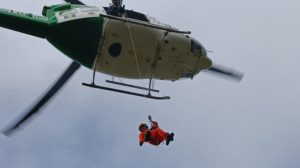
The firefighting service mobilised more than a thousand operatives from the region’s fire brigades, in a rotation system, as well as elements of the Joint Operational Force (FOCON) and the volunteer firefighters from the Azores, who were supported by 268 vehicles and three aerial means – the permanent helicopter and two Canadair planes, activated through the European Civil Protection Mechanism, which carried out 26 discharges between the 22nd and 23rd of August.
The fire motivated a commission of inquiry in the Legislative Assembly of Madeira, at the request of the PS, then the largest regional opposition party, intending to ascertain political responsibilities in the management of firefighting, in which several entities were heard.
The work, however, was interrupted in January 2025 following the fall of the PSD’s minority regional executive and was never resumed, with the Social Democrats later winning the early elections on March 23 and forming a government in coalition with the CDS-PP.
Samantha Gannon
info at madeira-weekly.com
Views: 15