Porto Santo is set to become an important part of Portugal’s growing space programme with the installation of two new facilities designed to support satellite communications and space surveillance.
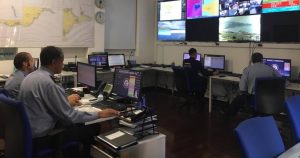
The announcement was made by Colonel Pedro Costa, head of the Portuguese Air Force’s Space Operations Centre, during the “Flight Plan Towards Space” event held at Expo Porto Santo.
The first project will see the construction of a ground station that will provide direct communications with satellites forming part of the Atlantic Constellation, an Earth observation programme being developed through a partnership between Portugal and Spain.
The Portuguese Air Force is developing the ground station in collaboration with the Centre for Technology and Innovation (CTI Aeroespacial) and will support what is expected to become a major network of Earth observation satellites. The constellation currently comprises two synthetic aperture radar (SAR) satellites, with two additional satellites scheduled for launch later this year. Under current plans, the network will expand to at least 14 radar satellites by 2030.
A second installation will consist of an advanced optical Space Surveillance and Tracking (SST) sensor, designed to monitor satellites and other objects orbiting the Earth. According to Colonel Costa, tracking space debris and other orbital objects is essential to preventing collisions and ensuring the safe operation of satellites, particularly as the number of spacecraft in orbit continues to increase.
While final technical assessments are still being completed, the proposed location for the satellite communications ground station is Sítio das Pedras Vermelhas, chosen for its proximity to communications infrastructure, which will enable rapid data transmission to command and control centres.
The optical surveillance sensor is expected to be installed at Cabeço de Bárbara Gomes, where low levels of light pollution provide ideal conditions for monitoring objects in space.
During his presentation, Colonel Costa highlighted the rapid growth of Portugal’s space sector, describing it as one of the country’s most dynamic high-technology industries.
He pointed to Portuguese company Neuraspace, which monitors more than 700 satellites using artificial intelligence to help operators avoid collisions between spacecraft travelling at speeds exceeding 25,000 kilometres per hour. He also highlighted Geosat, Europe’s second-largest commercial optical satellite operator, as further evidence of Portugal’s growing expertise in the sector.
Portugal currently operates two Air Force-controlled SAR satellites, with two more due to enter service in October, increasing the fleet to four by the end of 2026. Colonel Costa noted that the new satellites will follow inclined orbital paths that will pass over the Autonomous Region of Madeira approximately every 90 minutes.
Alongside these radar satellites, Portugal already operates five optical satellites through Geosat. The long-term objective is to have a combined fleet of 14 radar satellites and 12 optical satellites by 2030, forming Portugal’s contribution to the wider Atlantic Constellation programme.
The announcement marks another step in Portugal’s ambitions to establish itself as an important player in Europe’s rapidly expanding space industry, with Porto Santo set to play a key role in both satellite communications and the monitoring of Earth’s increasingly congested orbital environment.
Samantha Gannon
info at madeira-weekly.com
Views: 19