Last updated on 9th March 2026
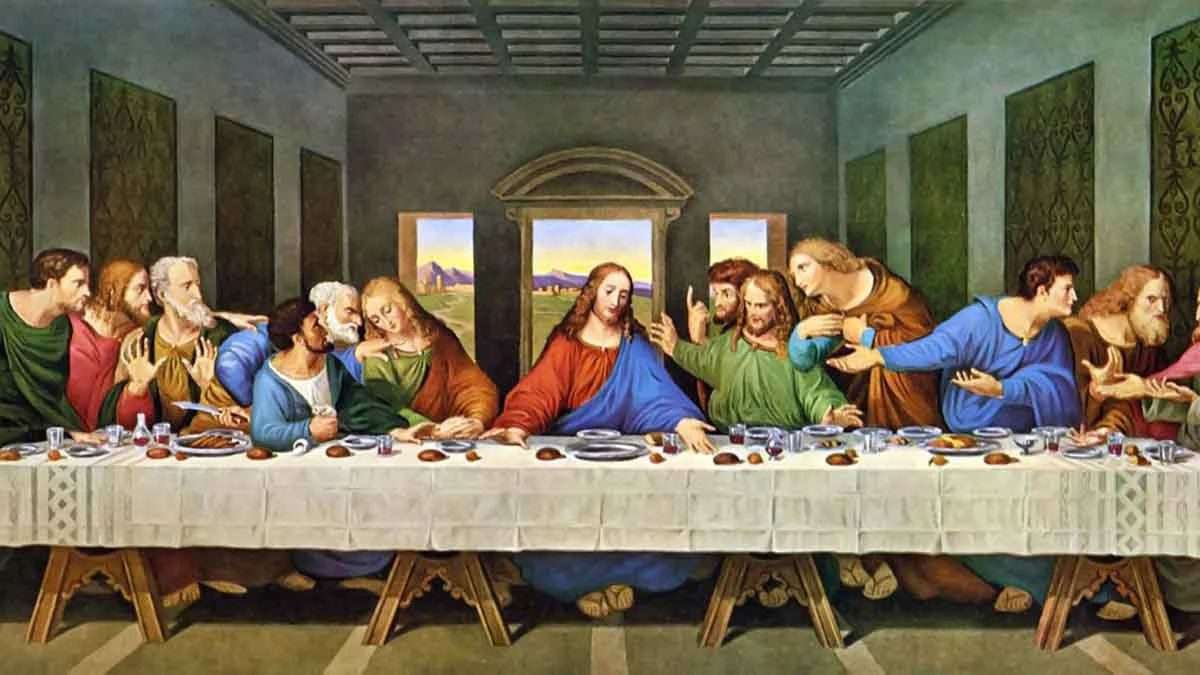
In Leonardo da Vinci’s “The Last Supper,” the facial expressions of the apostles reveal distinct neuroemotional patterns such as surprise, fear, incredulity, indignation, empathy, and suspicion, according to a 16-year-old study by the Fernando Pessoa University in Porto.
“Leonardo da Vinci’s painting captures the very first moment of a shared emotional reaction to the revelation of betrayal, serving as a naturalistic example of studying emotion in action. This is supported by research from Professor Freitas-Magalhães, director of the Laboratory of Facial Expression of Emotion at the Faculty of Medicine of Fernando Pessoa University.
In a press statement, the Fernando Pessoa University maintains that this research, which gave rise to the book “The Face of Betrayal: The Neuroscience of Emotion at Leonardo da Vinci’s Last Supper,” shows that facial analysis demonstrates that guilt, fear, and dissimulation form the neuroemotional triangle of betrayal, particularly evident in the figure of Judas.
The composition of the painting organises the apostles into four emotional groups, allowing them to compare different affective responses to the same stimulus, he points out.
“Facial coding shows that Leonardo captured extremely precise expressive microdynamics, anticipating, centuries earlier, principles now studied by the neuroscience of emotion. The work reveals that the human face functions as a biological interface between brain, emotion, and social communication, making deep neuropsychological processes visible.
“‘The Last Supper’ is not just a work of art, it is a neuro-emotional theatre where the biology of broken trust becomes visible in the human face,” claims Freitas-Magalhães.
In conclusion, the university believes that by integrating neuroscience, psychology of emotion, art history, and scientific facial analysis, the author demonstrates that Leonardo da Vinci’s painting can be understood as a true visual laboratory of human emotion. In this sequence, the book proposes a new reading of Leonardo da Vinci’s masterpiece not only as a religious narrative or artistic achievement, but as an extraordinary document of human psychology.
The analysis demonstrates that art can preserve, with impressive fidelity, the universal patterns of emotional expression.
Samantha Gannon
info at madeira-weekly.com
Photo: DN
Views: 69