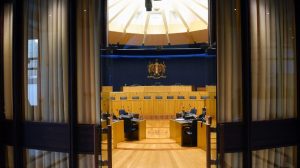
The Regional Secretary for Tourism, Environment, and Culture presented a diploma to the plenary session, creating the Regional System for Integrated Management of Rural Fires and setting out measures for contracting fuel management. The diploma follows a model that aligns with the current system on the continent while taking into account regional particularities.
For the Autonomous Region of Madeira, the specificities are well known: a demanding orography, a land occupation marked by the proximity between forest areas and nuclei, a natural heritage of incalculable value, and a strong pressure that aggravates, year after year, the risk of rural fire,” said Eduardo Jesus.
Madeira cannot “limit ourselves to replicating models designed for different realities. The Integrated Rural Fire Management System created by Decree-Law No. 82/2021 applies to mainland Portugal. It does not apply to Madeira. Madeira needs its own model. Adjusted to our reality.”
SRGIFR-RAM, he says, is a prevention system. “A system that organises, plans, and coordinates, which defines clear instruments, a Technical Regulation and a Regional Programme with priorities, goals, indicators, and structured investment.”
Through a Technical Regulation, “methodologies, technical standards, prioritisation criteria, and cartographic rules that guide the elaboration and system execution. The Regional Action Programme will define the strategies, the investments, and priority areas for intervention.
Among these areas will be the Priority Areas of Prevention and Safety, delimitation based on technical-scientific criteria of hazardousness and risk, where they will concentrate Priority actions for the prevention and protection against rural fires.
The strategic direction of the system will be ensured by the Regional Government, through the tutelage responsible for forests and protected areas, and the civil protection, ensuring effective coordination of regional policy in this area.
The execution of this system will imply, explains the Regional Secretary, “an articulated action of various entities and services, from the bodies of the Regional Government, such as Civil Protection and the Institute of Forests and Nature Conservation, but also the municipalities, whose proximity to the territory is essential for the effectiveness of the measures.”
The diploma provides for the creation of a Regional Commission for Integrated Fire Management as an advisory and technical articulation body inter-institutional, integrating regional and municipal representatives.
It also provides for the creation of Municipal Commissions for the Integrated Management of Rural Fires, with local liaison functions, monitoring of the implementation of measures, and issuance of an opinion on the actions planned for each municipal territory.
“If there is a lesson that the fires have taught us, it is this: there is no effective prevention without coordination. There is no effective combat without preparation. And there is no sustainable recovery without planning prior notice. This diploma guarantees this coherence between planning, execution, and supervision,” he stresses.
The management of fire breaks, preventive forestry, water, and the support infrastructures, says Eduardo Jesus, “cannot be held hostage to excessive administrative slowness, especially in critical periods. Therefore, the diploma establishes special measures for public procurement, with reference to article 7 of Law no. 30/2021, which created a specific public hiring regime for areas considered priority and urgent”.
This regime allows faster and less bureaucratic procedures “when they are at stake interventions whose effectiveness depends on the time factor.”
In the case of Madeira, the Regional Government understands that “these measures must also be adapted to the regional reality, similar to what already happens with the regime of the Public Procurement Code, which was adjusted to our specificities.”
It is proposed that the limit applicable to special procurement procedures under the regional system is set at 1,087,500 euros – instead of the 750,000.00 provided for in paragraph 1 of Article 7 of Law 30/2021, a value that results from the application of the regional coefficient of 1.45.
“With this regime, the Region now has instruments that allow it to act more quickly when circumstances require it, avoiding excessive action that could compromise the effectiveness of interventions. Matters, however, it should be noted that these procedures remain subject to applicable control and supervision, in particular the supervision of the Court of Auditors, as well as a strengthening of the requirements of accountability and rigor on the part of the contracting entities and contractors,” he says.
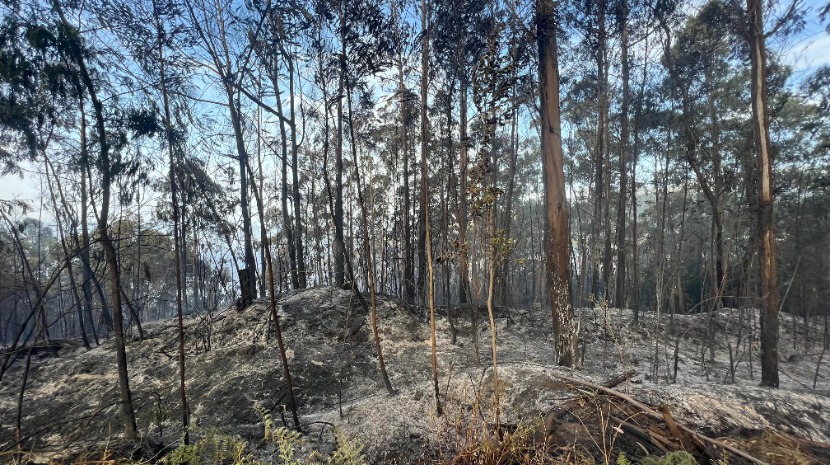
This is all well and good; however, the disposal of brushwood needs to be addressed. In many places in Caminho dos Pretos, a firebreak area, much of the brushwood is pushed towards boundaries, or, in the instance of levada clearance, left on the side to rot. This merely provides dry kindling for summer fires, endangering homes and small farms. In some areas, places that were originally cleared to provide a firebreak are as densely wooded now as they were before they were cut.
Samantha Gannon
info at madeira-weekly.com
Views: 0