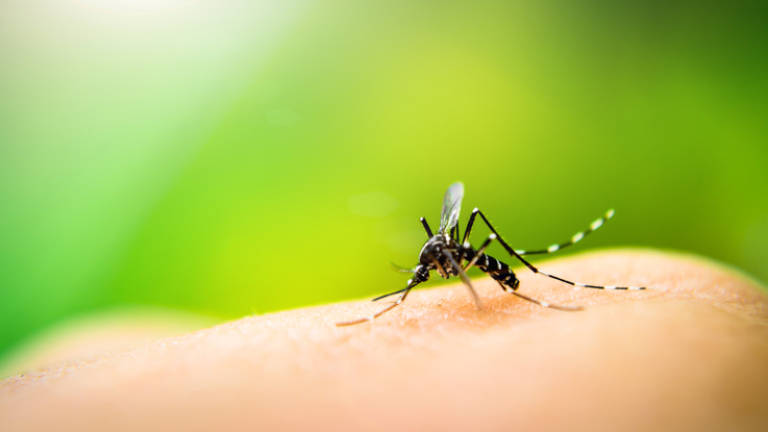
Much of Europe has a broad risk of Chikungunya virus transmission, and Portugal is part of a high-risk area, warns a study by the UK’s Centre for Ecology and Hydrology.
The Chikungunya virus, responsible for a debilitating tropical disease caused by the bite of infected mosquitoes, poses a “greater health threat in Europe than previously thought, and can be transmitted even when air temperatures are as low as 13 degrees Celsius,” concluded the research published today in the Royal Society Scientific Journal.
According to the independent research institute with about 600 researchers from various areas, the new study reveals that the virus can transmit with temperatures of only 13 to 14 degrees Celsius, unlike previous research that indicated a minimum of 16 to 18 degrees. This means there is a higher risk of Chikungunya outbreaks in more areas and for longer periods than previously thought, warned the researchers, who created a three-level map for Europe: high, moderate and low.
Portugal is in the area of greatest risk, together with countries such as Greece, Italy, Malta, and Spain, with the study predicting that transmission can occur for about six months a year.
The risk gradient is greatest in southern European regions, narrowing as one moves north and northwest, the study concluded, warning that approximately 50% of Europe’s geographic area is now conducive to transmission during July and August.
In 2025, there were record numbers of local outbreaks of Chikungunya in France and Italy, and the tiger mosquito (Aedes albopictus) has also been responsible for the increase in dengue cases in these countries in recent years.
The researchers warned that as Europe is rapidly warming due to climate change, the tiger mosquito is gradually expanding northwards on the continent.
“The lower temperature threshold we have identified will result in more areas, and more months of the year, potentially suitable for transmission” of the virus, said Sandeep Tegar, an expert at the U.K. research centre who led the study, noting that warmer weather also increases the rate of virus replication in an insect’s body, thus increasing the risk of transmission.
The first known outbreak of Chikungunya was reported in Tanzania in 1952, but the virus currently affects public health in more than 110 countries across Asia, Africa, Europe and the Americas.
Identifying the specific locations and months of possible transmission will allow local authorities to decide when and where to act to reduce the risk or scale of outbreaks, Sandeep Tegar said.
In November 2025, the President of the National Institute of Health, Ricardo Jorge (INSA), who officially coordinated the Vector Surveillance Network, stressed that Portugal is prepared to respond to any emergencies caused by diseases transmitted by mosquitoes and ticks.
Fernando Almeida told Lusa that Revive – Vector Surveillance Network has about 350 employees across the country, ensuring the early detection of Zika, Dengue and Chikungunya transmission vectors, at a time when the Aedes albopictus mosquito is already widespread across the country.
Revive’s 2024 report indicated that the mosquito species in question was detected, from 2017, in the North, Algarve, Alentejo and Lisbon and, in 2024, for the first time, in the centre of the country, which points to a “situation of establishment and geographical dispersion” across several regions of Portugal.
Chikungunya Symptoms:
Incubation Period
Symptoms typically appear 3–7 days after being bitten (range: 2–12 days).
Common Symptoms:
The illness often starts suddenly and may include:
-
High fever (often above 39°C / 102°F)
-
Severe joint pain (hallmark symptom)
-
Often affects hands, wrists, ankles, and knees
-
Usually symmetrical (both sides of the body)
-
-
Headache
-
Muscle pain
-
Fatigue
-
Rash (appears 2–5 days after fever begins)
-
Swollen joints
The name “chikungunya” comes from a word meaning “to become contorted,” referring to the stooped posture caused by intense joint pain.
Most Distinctive Feature: Persistent Joint Pain
Unlike many mosquito-borne illnesses, chikungunya is known for:
-
Joint pain that can last weeks, months, or even years
-
Arthritis-like symptoms in some patients
-
Morning stiffness similar to rheumatoid conditions
Most people recover fully, but about 30–40% may experience longer-term joint problems.
Complications can arise in:
-
Older adults
-
Newborns infected around birth
-
People with underlying health conditions
Possible complications include:
-
Neurological issues (e.g., encephalitis)
-
Heart inflammation (myocarditis)
-
Eye inflammation
-
Rarely, organ failure
Death is uncommon but can occur in vulnerable individuals.
Samantha Gannon
info at madeira-weekly.com
Views: 226