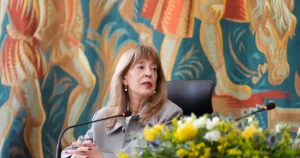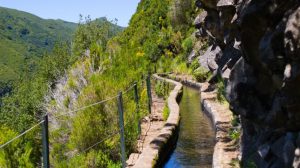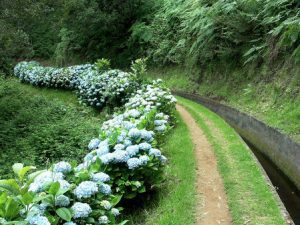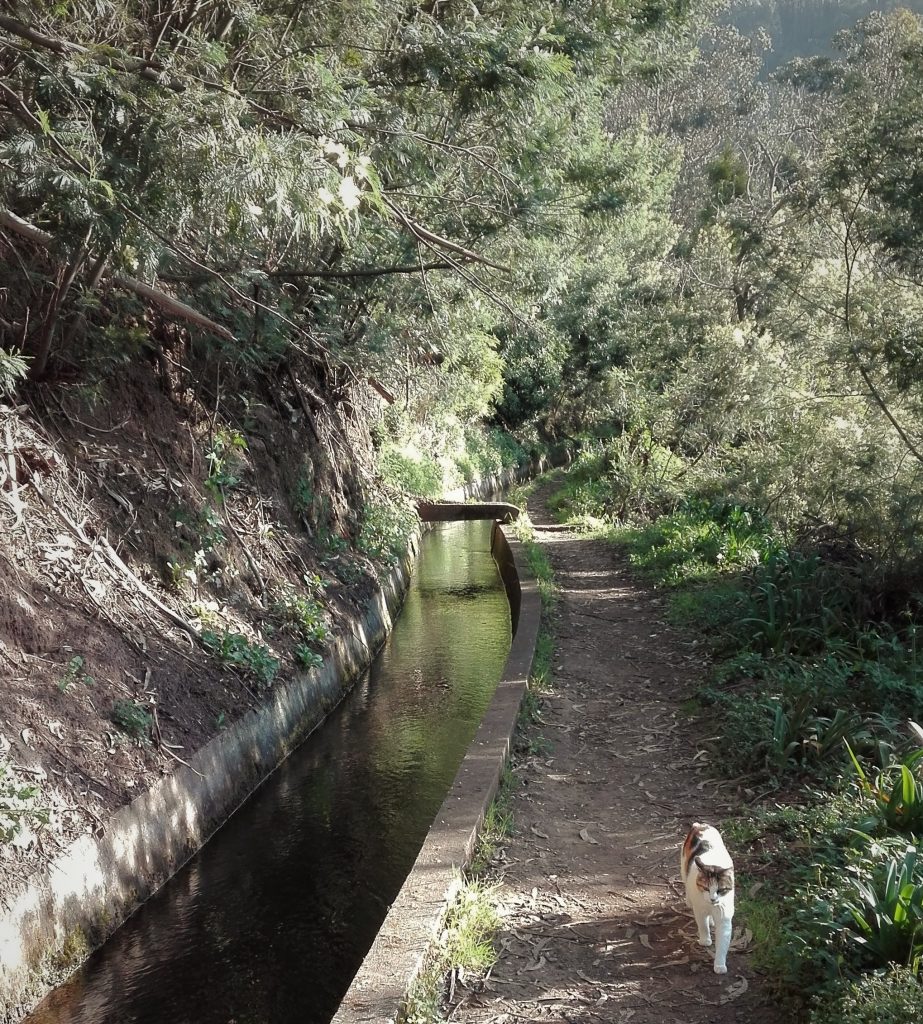
Rafael Nunes, deputy of Juntos Pelo Povo (JPP) in the Madeiran parliament, strongly criticised the Government, accusing it of creating an “administrative blockade” that limits Madeirans’ access to the region’s trails and levadas by imposing an online registration and booking system.
In his speech, before the agenda was presented, the parliamentarian classified the measure as another episode of a “deep governmental mess in the environmental area,” stressing that what has always been a right is being transformed into a state authorisation.
“What should be an indisputable right, free access to our mountain paths, is being transformed into a kind of state permission, under the pretext of managing tourist flows or so-called carrying capacity,” he said.
Rafael Nunes considered the solution “excessive and disproportionate”, arguing that the digital platform imposed on all citizens “creates a regime of authorisations for something that belongs to everyone by right.” The deputy also recalled that this is not the first time the Regional Government has backtracked on this matter, citing the attempt in 2017 to impose fees on nature activities. “After our opposition, the Government ended up backing down, alleging legal problems. Today, instead of learning from mistakes, they insist on creating even more nonsense.”
A key concern raised during the intervention was the situation of farmers. The deputy wondered how the new rule would work for those who need daily access to their land. “Does it make sense to ask a farmer, who needs to irrigate or tend crops, to register on an online platform?” he questioned, pointing out that the ordinance “makes no distinction between farmers and other Madeirans.”
In practice, he warned, farmers may be required to prove ownership of the land before the Forest Police. “This means that they will have to carry the land registry ‘under their arm’ to prove that they are owners,” he said. The problem, according to the deputy, is aggravated in the case of agricultural workers who do not own the land. “Many do not have mastery of the internet and start to depend on a digital platform to exercise a secular right of way, enshrined in the Civil Code,” he stressed.
Rafael Nunes also raised the possibility of direct conflicts between residents and tourists. “Will farmers be prevented from reaching the properties where they work because a tourist registered first? And if they don’t register, will they be fined?” He asked, classifying the scenario as “absurd” and “ridiculous.”
While recognising the importance of territory management and tourism, the JPP deputy was adamant: “It can never serve as an excuse to control and restrict the movements of citizens in their own territory. They can never be used to condition the access of Madeirans to their natural heritage.”
Rafael Nunes criticised the Government for now invoking the concept of carrying capacity, recalling that the JPP has warned for years of the need to control mass tourism. “These recommendations were systematically refused by the PSD Government. It was only when the situation became unsustainable in places like Fanal or Pico do Areeiro that this concern was assumed. But it came too late… and now the Executive is treating Madeirans as if they are tourists.”
The deputy also denounced a lack of transparency in the decision-making process. He revealed that, on the 19th of November, he requested access to the studies that supported the definition of the carrying capacities, but received as a response that the report was preliminary and that the process was not concluded. However, he pointed out several official publications demonstrate the opposite, including news in the media, the publication of an ordinance with defined rates and official information from the IFCN to economic operators.
“These publications prove that the decision has been made and that the decision-making process has been completed,” he said. In view of this, he put the Government before two hypotheses: “Either it made decisions based on a preliminary report and lied about it in Parliament, or it lied when it said that it did not have a definitive report.”
For the JPP deputy, this is a blatant lie and a serious institutional disrespect, with the concealment of documents from the main supervisory body of the Regional Government. “It is proven that the Government has made light of its deputies and the Madeirans,” he concluded, accusing the Executive of imposing digital bureaucracies that treat the citizens of the Region “as foreigners in their own land,” in a territory whose maintenance is paid daily by its people’s taxes.”
Rafael Nunes does not doubt that “we are facing a clear administrative blockade to Madeirans who have the right to access the land where they were born without having to register on platforms as if they were foreigners.” And he questioned: “What is hidden in these reports? Why cannot they share them to the main supervisory body of the Government? What do they hide?”
The JPP will have to resort to the courts if the documents are not made available, he warned,
In conclusion, he asked if Madeirans will have to submit a fiscal document from the Treasury and Social Security just to walk on their own land.
Samantha Gannon
info at madeira-weekly.com
Views: 129