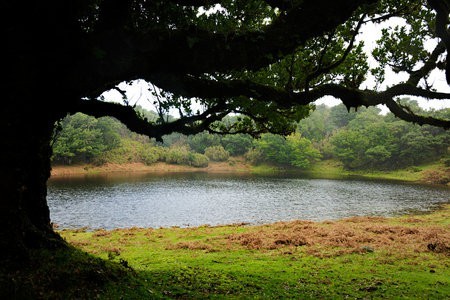
The Regional Nucleus of Quercus da Madeira has expressed “deep concern” about the situation in Fanal, denouncing what it describes as the “slow death of this extraordinary natural heritage.”
In a statement signed by the President of the Regional Nucleus of Madeira, Elsa Araújo, the environmental association warns that “these centenarian trees insist on surviving, but cattle soon devour their offspring. And he asks: “Why don’t they prevent cattle from accessing these ancient trees? Cows are not aware of this valuable heritage, but whoever is at the head of the Institute of Forests and Nature Conservation (IFCN) should be aware of this and know how to preserve fragile populations of young saplings. Why doesn’t the Regional Secretariat for Tourism, Culture, and the Environment, and the IFCN take measures to protect this heritage? Why is grazing not prevented in this protected and fragile area?”
Another problem identified by Quercus is related to “excessive visitation,” which leads to uncontrolled parking and soil compaction. “The high number of visitors results in car parking that exceeds the capacity of the two existing car parks, and people resort to parking along the roads. These crowds are destroying the fragile components that make up this beautiful natural heritage,” adds Elsa Araújo.
“There are dozens and dozens of visitors who walk around the reserve, but there are no defined trails. This natural trauma, coupled with people climbing 100-year-old trees just to get a photo, the trampling on herbaceous plants, and the compaction of the soil, is killing the area, as rain cannot filter through. This will cause run-offs in the winter, causing even more erosion, allowing tree roots to become exposed and damaged as a result. Localised flooding will also be a problem.
Quercus also criticizes that “Fanal has not been managed as a Rest and Silence Zone” and argues that the IFCN should “determine the carrying capacity for this and other protected areas, to ensure its integrity and conservation.”
For the association, “the Regional Government finally recognised the problem of exaggerated visitation and recommended alternative routes to tour operators. A subtle way to ‘shake the water off their coats’? When will these rulers find the courage to control access to protected areas, safeguarding their natural values? Can’t they see that degraded natural spaces are also a bad tourist poster and say a lot about the lack of quality of governance?”
“We demand that the IFCN fulfill its legal duty to conserve our natural heritage! Control of visitation and end of grazing in Fanal, now!” Argues Quercus.
Views: 11