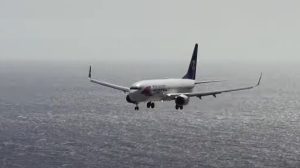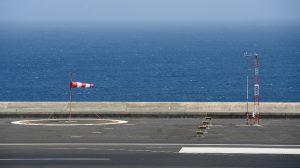
Madeira Cristiano Ronaldo International Airport has been ranked as the European airport most likely to cause anxiety in passengers, according to an exclusive AirAdvisor ranking, released last week.
The Madeiran airport, the only Portuguese airport to appear on this list, received a rating of 88 points in the Index of Passenger Discomfort and Real-World Exposure (PURE), developed by AirAdvisor aviation analysts, a Global Legal Technology Platform Dedicated to Enforcing the Rights of air passengers.
This ranking is the First scoring model that combines official operational data with sensory factors known to increase the fear of flying, attributing a score to each airport (0 to 100) in seven stressors perceived by passengers. The CEO and founder of AirAdvisor, Anton Radchenko, explains that this ranking identifies European airports that are more likely to trigger anxiety in passengers, not because they are unsafe, but because of the frequency with which passengers are exposed to conditions that increase stress, such as steep descents, crosswinds, short runways, or abrupt approaches.
“It is not about safety; Commercial flights continue to be extraordinarily safe. This is where passengers are most likely to experience turbulence, unusual gusts of wind, or bumpy approaches.” Anton Radchenko, CEO of AirAdvisor
Airports: Gibraltar, in the Overseas Territory of the United Kingdom, Innsbruck, in Austria, and London City, in the United Kingdom, complete the list of four airports in Europe more likely to scare passengers.
According to the CEO of AirAdvisor, island airports dominate the list, from Madeira and Gibraltar to the Greek islands and Tenerife, due to waterfront locations, which make them susceptible to cross and seasonal winds. Another point is surrounding cliffs and short runways, which intensify the landing and take-off experience for passengers.
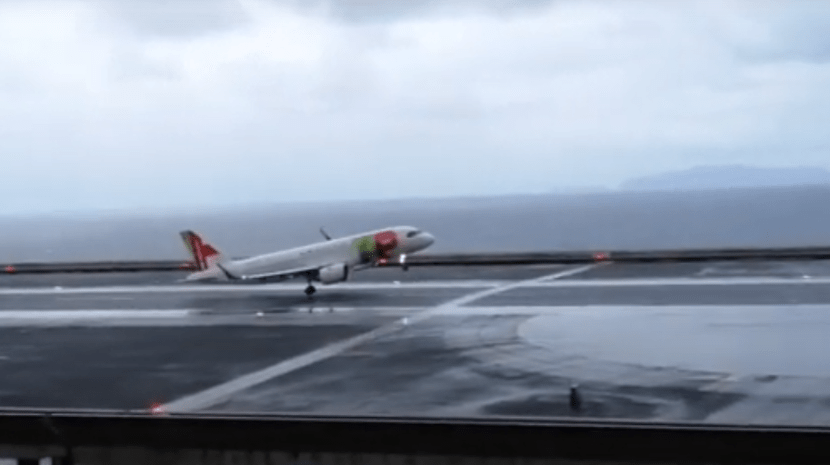
He further comments that, even though these airports are fully certified and safe, runways stand out as stress amplifiers, as happens on the Island of Madeira, where the runway is perched on concrete pillars over the ocean, as well as on Skiathos, Greece, where aircraft fly at low level over a road and beach before landing. The CEO of AirAdvisor also cites the famous steep descent of the London City, which creates highly dramatic visuals that often make the passengers grab their armrests
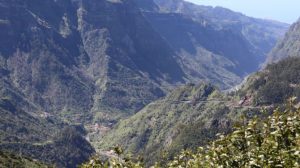
Another recurring factor that can amplify stress among passengers, according to Anton Radchenko, is the mountainous terrain near the airports. In Tenerife and Innsbruck, the valleys are very close to the runway of landing, forcing pilots to circle and change course. Flight procedures that are common for pilots in this region can cause anxious passengers to become stressed. However, by creating the AirAdvisor index, they hope that it will help passengers anticipate the sensory experience and understand that they are safe.
“Our goal with this ranking is to contextualise these numbers for travellers,” explains Anton Radchenko, CEO of AirAdvisor. “When passengers know that turbulence is expected, or delays due to weather conditions at certain airports are common, it will allow them to understand that these conditions are common and not signs of something going wrong.
Check the list of the 10 most difficult airports in Europe for nervous travellers:
1. Funchal/Madeira (Portugal) – 88/100
2. Gibraltar (Territory UK Overseas) – 84/100
3. Innsbruck (Austria) – 83/100
4. London City (United Kingdom) – 81/100
5. Vágar/Faroe Islands (Denmark) – 79/100
6. Keflavík (Iceland) – 76/100
7. Skiathos (Greece) – 75/100
8. Santorini (Greece) – 72/100
9. Mykonos (Greece) – 70/100
10. Tenerife North (Spain, Canary Islands) – 68/100
How the PURE Index works
The model scores each airport (0 to 100) out of 7 “stressors” perceptible by passengers:
- Exposure to wind and turbulence (40%) – how often local winds, cross or mountain winds cause difficult landing conditions.
- Approach geometry (20%) – if landings require steep descents, tight turns, or special procedures rather than a direct approach.
- Road restrictions (15%) – runway length limits, narrow width, slope, or unusual designs, such as the Madeira viaduct.
- Proximity to the land (10%) – a proximity to mountains, cliffs, or water around the airport that can shape the approaches and cause a sense of intimidation.
- Operational variability (10%) – with what frequency passengers are likely to face circling, patterns of weather-related waits or delays.
- Peak seasonality (3%) – if certain months (such as the Meltemi winds in the Aegean summer) bring stronger and more disruptive flight conditions.
- Sensory cues (2%) – visions or dramatic sensations that can amplify discomfort, such as flying low over a beach or seeing the runway perched over the sea.
Samantha Gannon
info at madeira-weekly.com
Views: 25