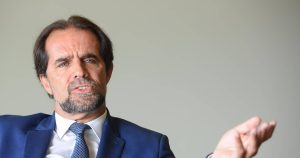
PS-Madeira leader Célia Pessegueiro has criticised Regional Government President Miguel Albuquerque for rejecting the region’s poverty figures, warning that failing to acknowledge hardship undermines efforts to address it.
Speaking during a visit to Lombada da Ponta do Sol, she referred to the European Anti-Poverty Network report published this week, which found that around one in five Madeirans was at risk of poverty or social exclusion.
Pessegueiro questioned Albuquerque’s response, particularly as the Regional Government works with the organisation responsible for the report and has commissioned studies and assessments from it.
She argued that the Government must recognise both the difficulties faced by people living in poverty and the inequalities affecting those who work but still struggle financially.
“Not acknowledging this reality, not acknowledging something that the Government’s services know very well, particularly because they work with this organisation, is halfway to doing nothing to change the situation,” she said.
The PS-Madeira leader added that, just as the Government welcomes positive results, it should also acknowledge less favourable findings and use them to shape policies that improve people’s lives.
In a press release, Pessegueiro highlighted a recent €2 million increase in funding for PROAGES, a programme supporting people who generally have no access to other forms of social assistance.
She described a contradiction between increasing support for around 5,000 families and rejecting figures showing the extent of hardship in Madeira.
“There is no way to work seriously on this issue without recognising this reality. There are situations of hardship and deprivation that must be acknowledged and addressed through the Regional Government’s policies,” she stressed.
Albuquerque challenged the figures on Thursday, saying the Regional Government’s indicator was 16%, rather than the approximately 20% cited in the report.
“That is not true. What we have now is 16%,” he said, arguing that Madeira’s figures were lower than those of several Spanish regions, including the Canary Islands.
He also questioned whether some statistical criteria adequately reflected Madeira’s circumstances, citing differences in household heating needs between the archipelago and colder regions.
However, the report distinguishes between different measures. It places the proportion of Madeira’s population at risk of poverty or social exclusion at 20.5% in 2025, while the monetary poverty rate was 16.6%. These are separate indicators and should not be treated as interchangeable.
Both figures improved compared with 2024, when they stood at 22.9% and 19.1%, respectively. This improvement does not remove the hardship identified in the report, but the distinction is important when assessing the figures disputed by the Regional Government.
During her visit, Pessegueiro also raised residents’ concerns about construction of the road linking Caminho do Jangão to the Pedras viewpoint in Lombada. The project began about a year ago, when the Socialist Party led the Ponta do Sol Council.
According to Pessegueiro, residents said the work was not following the plans originally agreed and put out to tender. They warned that the road would stop short of the agreed point, leaving some homes without the promised access.
She said residents had surrendered land based on agreements, including written commitments, that set out how the work would proceed. The PS will raise the matter with the current council.
Pessegueiro also called for water supply and sewerage connections to be extended along Caminho do Jangão, saying infrastructure was already in place to accommodate them.
Samantha Gannon
info at madeira-weekly.com
Views: 47