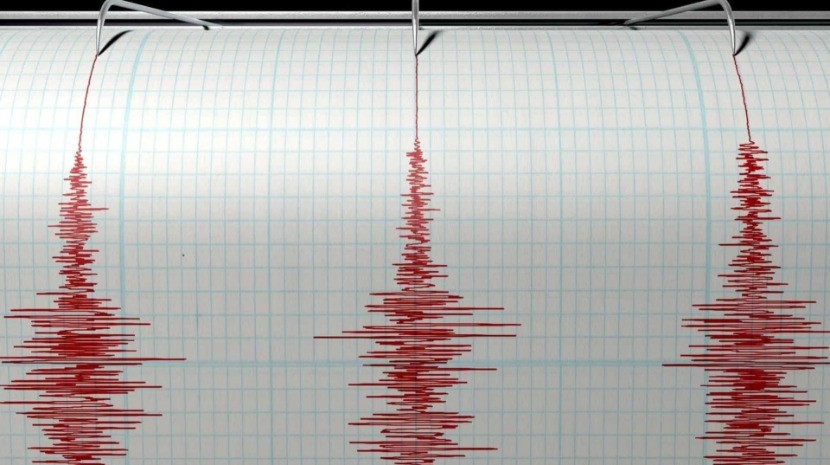
The Portuguese Institute for the Sea and the Atmosphere (IPMA) recorded three earthquakes on Monday, the 20th of July, two in the Madeira-Tore region to the south-west of the archipelago and one near Porto Moniz.
The first earthquake occurred at 17.51 and measured 1.5 on the Richter scale. Its epicentre was located north-east of Porto Moniz, at coordinates 33.284°N, 17.031°W, at a depth of 10 kilometres.
Later, at 22.44, a magnitude 3.1 earthquake was recorded in the Madeira-Tore area, with its epicentre at coordinates 36.259°N, 16.296°W and a depth of 26 kilometres.
Approximately 35 minutes later, at 23.20, a second earthquake struck the same offshore region. It measured magnitude 2.5 and had an epicentre at coordinates 36.321°N, 16.363°W, at a depth of 27 kilometres.
Although none of the earthquakes was large enough to cause damage, the events are a reminder that Madeira lies within a geologically active part of the North Atlantic.
The Madeira-Tore region is a broad submarine ridge and seamount system extending south-west from the Madeira archipelago towards the Tore Seamount, west of mainland Portugal. Rather than marking a conventional tectonic plate boundary, the area lies within the African Plate, where ancient faults continue to be reactivated by stresses generated as the African Plate slowly moves northwards towards the Eurasian Plate.
These movements regularly produce small to moderate earthquakes, most of which occur beneath the seabed and pass unnoticed by the population. Earthquakes of this size are common in the region and are closely monitored by IPMA as part of its ongoing seismic surveillance of the Portuguese territory.
Madeira itself is of volcanic origin, having formed millions of years ago through volcanic activity associated with a mantle hotspot. While the island’s volcanoes are considered extinct, the underlying geological structures remain active enough to generate occasional seismic events, making earthquake monitoring an important part of understanding the archipelago’s dynamic geological environment.
Views: 46